
Garments made to be worn and loved for years — I design, cut and sew them one at a time, in Berlin.
Ever since I was a child, wearing clothes I loved would brighten my heart and make ordinary days feel enjoyable. That is part of why I wanted to make clothes. I want the people who wear what I make to feel the way I felt as a child. Making clothes with that feeling — that is ARAI.
幼い頃から好きな服を着ていると心が明るくなったり日常が楽しくなったりしたのが服を作りたいと思ったきっかけでもあります。私が作った服を着てくれた人が自分が幼い頃感じたような気持ちを感じてもらいたい、そんな気持ちで服作りをしているのがARAIです。
産靈 Musuhi
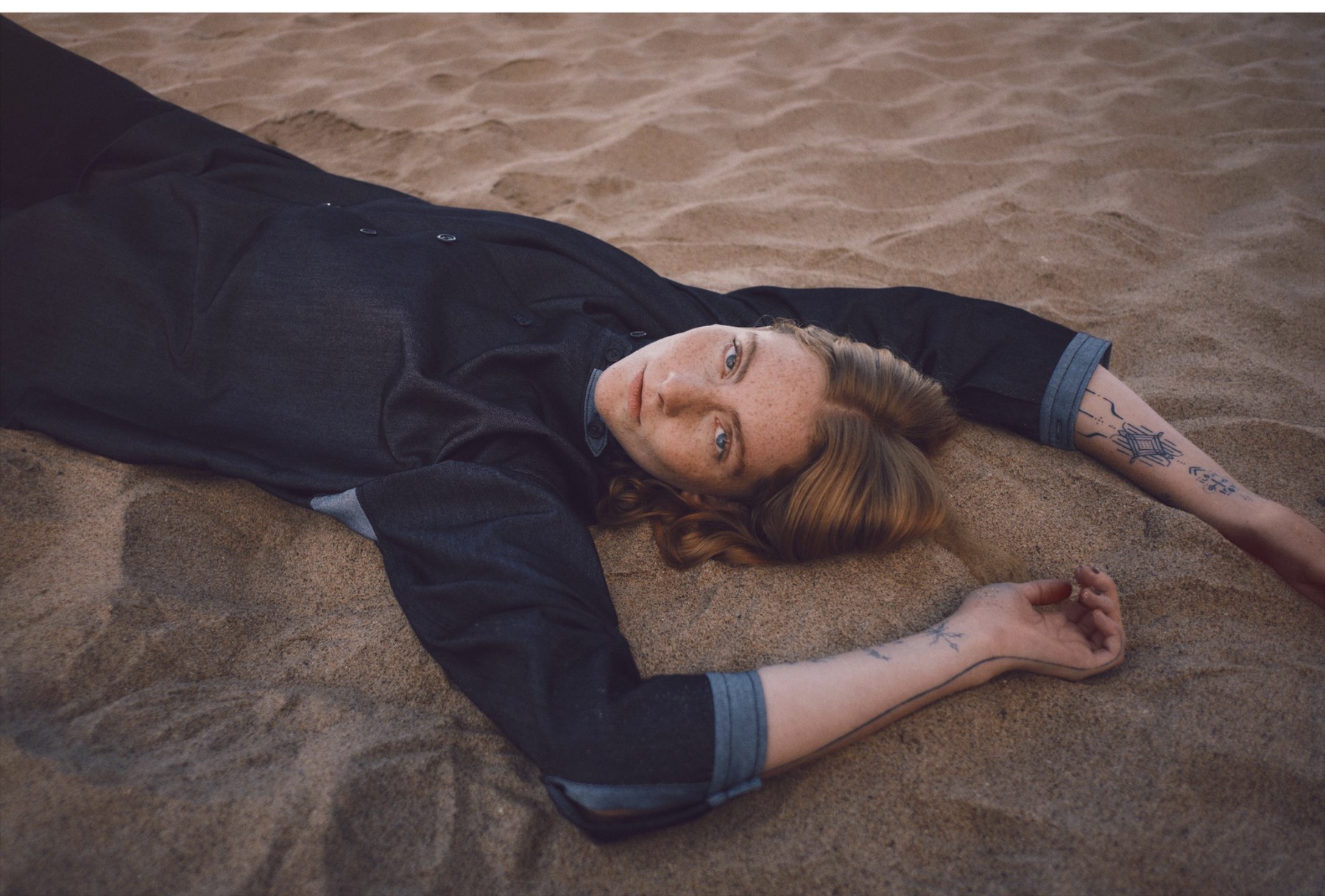
Musuhi 産靈 is ARAI’s 2026/27 collection, and the work closest to me now. I drew it from the Zen monk Issan Ichinei, who travelled from China to Japan seven hundred years ago and became a central figure in the exchange between the two cultures.
I wanted the garments to hold a sense of space — 無 mu, emptiness · 空 ku, void · 寂 jaku, stillness. For Berlin Fashion Week the collection was presented inside a working tea house rather than on a runway — the pieces worn and seen up close, over cups of Japanese tea. Designed, cut and sewn in Berlin, in cloth chosen bolt by bolt.
presentation · 5 july 2026
at Kissabō, Berlin
- curation & realizationLuzie Kork
- movementYui Kawaguchi
- musicsub-tle.
- hair & make-upNoriko Takayama
Garments, bags and objects — made by hand in Berlin.
A few bodies of work, since 2005. Each piece is cut and sewn one at a time.
I choose the cloth bolt by bolt. Most of what is in my studio now is judo-uniform cloth — sashiko cotton from a mill in Gifu, strong enough to be worn with affection for years.
Every piece is designed, cut and sewn in Berlin — I cut the patterns and sew each garment myself, in pesticide-free cotton, linen and natural cloth.
- no. 001 · natural indigo cottona couple in Kiryū, Gunma · 2024They grew the indigo themselves, fermented it, dyed the thread, and wove it beside their house. There will be no more of this cloth.
- no. 002 · silk — a 正倉院 Shōsōin reconstructiona workshop in Kiryū · 2024A friend who researches silk entrusted it to me in Japan; it was reconstructed in the same way as one of the Shōsōin textiles.
- no. 003 · linena workshop in Łódź, Poland · 2019I bought it from someone who brings cloth directly from Poland. Thick yarn — a strong feeling, for garments people keep a long time.
- no. 004 · sashiko cotton, black — judo-uniform clotha mill in Gifu · 2018The cloth of judo uniforms: strong enough for everyday garments worn with affection for years.
- no. 005 · sashiko cotton, black & whitethe same mill in Gifu · 2018I have worn a jacket of it for years; it shows little wear and stays comfortable.
- no. 006 · cotton denimfound in Berlin · 2020Origin unknown.
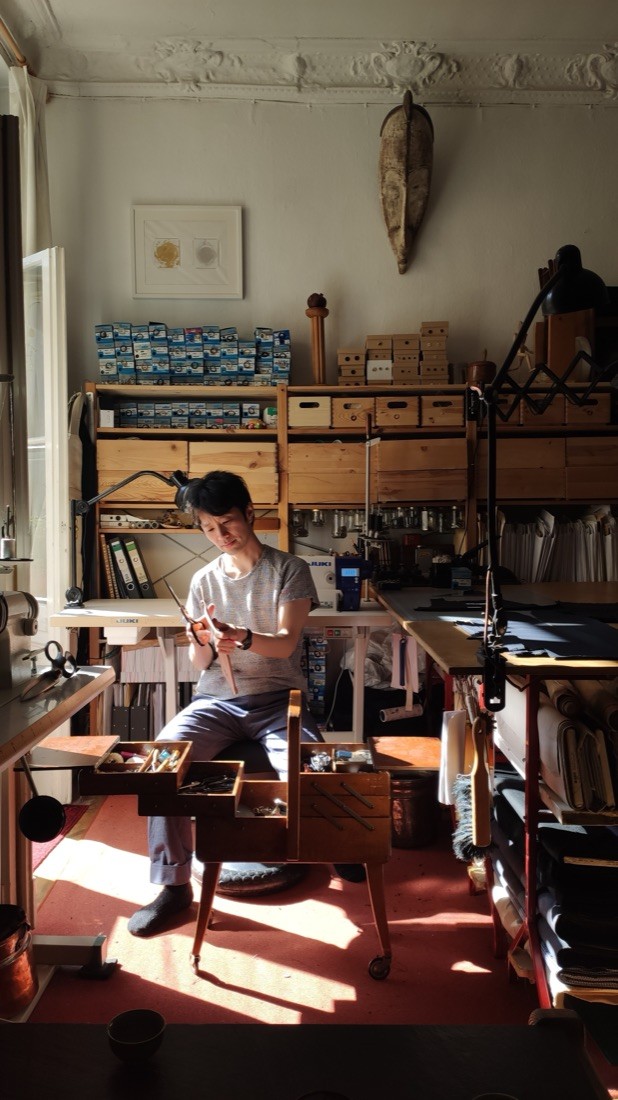
From a silk-farming house in Gunma to a studio in Berlin.
新井 修 — I am Osamu Arai. I was born in 1982 in Maebashi, Gunma, 100 km north of Tokyo. Gunma made the silk for kimono, and I grew up in Shirasawa in a house of silkworm farmers — close to cloth from the start.
I learned to cut patterns and make garments — in Japan, in Sydney, and finally in Berlin, where I settled in 2011. My own label, ARAI, has shown in Berlin and Gunma since 2005.
I make my garments to last, and to feel good on an ordinary day.
arai · since 2005
- 2005 →Own collection & exhibitions · Berlin & Gunma
- —Made-to-order & private commissions
- 2024Film “ARAI” · Silver Award, Paris Film Awards
- bornMaebashi, Gunma, Japan · 1982
One letter a month — what is on my cutting table in Berlin, and the cloth under it.
Open studio and trunk-show invitations go to the letter first. One email a month, nothing else.
one confirmation email first · unsubscribe anytime, with one click · the letter records opens and clicks · datenschutz
By appointment, in Berlin.
By appointment — contact@arai-studio.com
join the bolt letter